AI and Machine Learning
Why 35% of Aesthetic Clinic Calls Go Unanswered (And How AI Changes That)
Up to 37% of medspa and aesthetic clinic calls go unanswered — costing clinics $42,600+/year. Here's the data on missed calls and how AI receptionists fix it.
11 min read
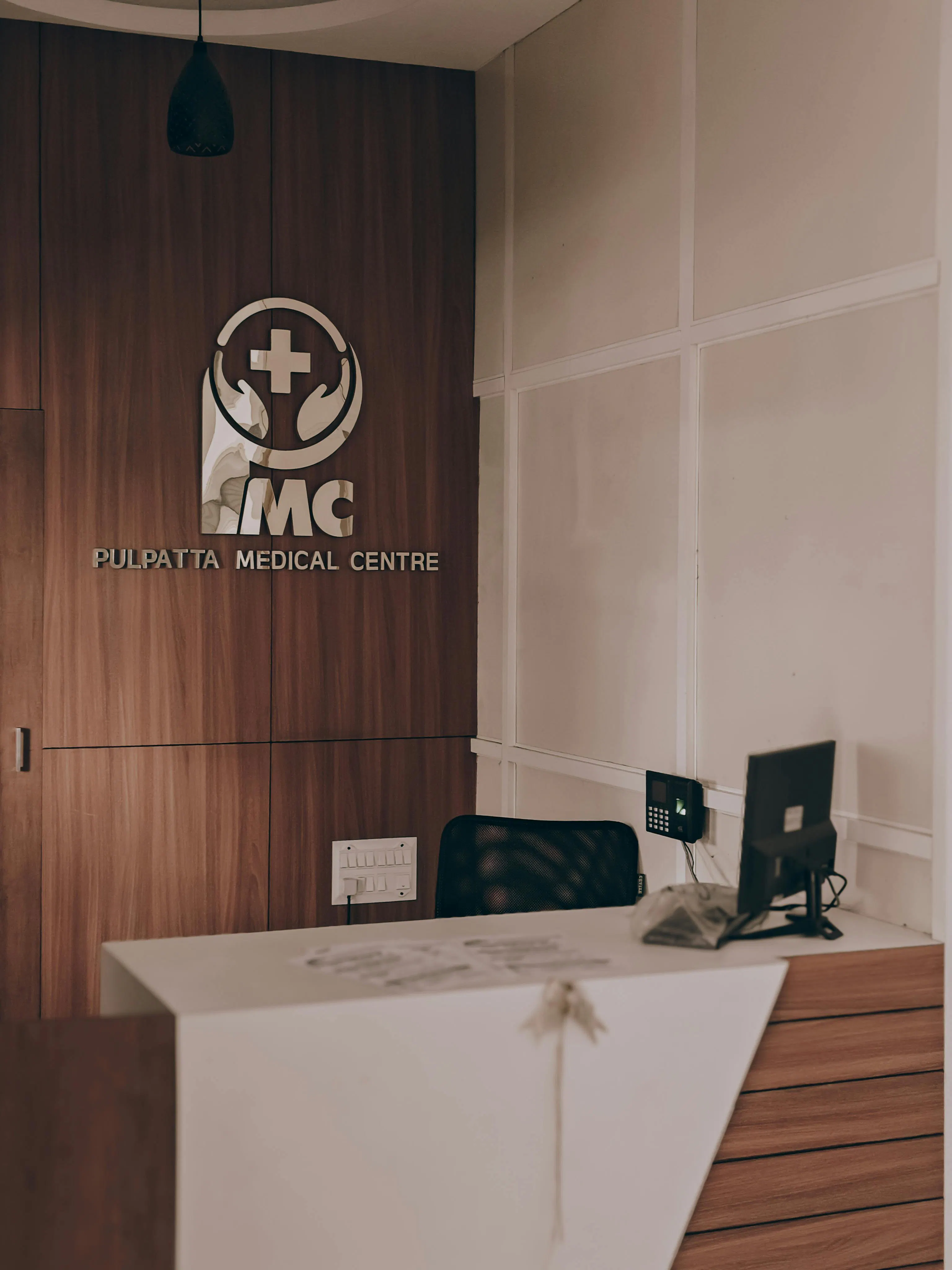
Your phone rings at 1:47pm on a Tuesday. A new patient wants to book the hydrafacial she saw on your Instagram. Your front desk is mid-check-in, answering a question about aftercare, and handling a cancellation text. The call goes to voicemail. She doesn't leave a message.
That's it. She's gone.
This plays out across aesthetic clinics hundreds of times a day. Zenoti's 2025 platform data — covering thousands of salons, spas, and medspas across North America — shows up to 37% of calls go unanswered. The part that's harder to fix: 82% of those missed calls happen during business hours, not after closing. Your team is there. They're just doing three other things at once.
This article breaks down why the missed-call problem keeps happening at aesthetic clinics, what it's costing you in lost revenue, and how AI receptionists are changing that math — with real numbers from clinics that have already made the switch.
Why Do So Many Aesthetic Clinic Calls Go Unanswered?
Up to 37% of calls to salons, spas, and medspas go unanswered, according to Zenoti's 2025 analysis of thousands of North American locations (Zenoti, 2025). That's more than one in three patients who called your clinic and got nothing. And the reason isn't understaffing — it's a timing problem.
Patients call during their lunch break, between meetings, sitting in their car after the school run. For your clinic, those same windows are your busiest: the 1pm Botox client is checking in, the 1:15 hydrafacial is asking about aftercare, and someone else needs a callback logged. The phone has been ringing for 90 seconds. Something has to give.
Zenoti's data confirms this pattern. 82% of missed calls happen during business hours — not late at night, not on bank holidays (Zenoti, 2025). The after-hours gap compounds it further: 34% of all appointment requests arrive outside clinic hours, when there's literally nobody at the desk. 81% of medspa clients say they want to book outside regular hours, but most clinics have no way to capture those calls (Zenoti, Oct 2025).
What does that add up to in practice? A clinic handling 60 calls a day and missing 37% of them is losing 22 potential patient contacts every single day. Not a rough patch. A structural problem built into how phone-based booking works.
The real issue isn't that clinics are understaffed. It's that the phone is a single-threaded system running inside a multi-threaded environment. One receptionist, however skilled, can't handle walk-ins, checkouts, and incoming calls simultaneously without something dropping. An AI receptionist doesn't replace the person at the desk — it adds the second thread.
According to Zenoti's 2025 platform data from thousands of North American medspa and salon locations, up to 37% of inbound calls go unanswered, with 82% of those missed calls occurring during regular business hours (Zenoti, 2025). For aesthetic clinics relying on phone-based booking, this represents a structural capacity gap that staffing alone can't close.
What Does a Missed Call Actually Cost Your Clinic?
85% of patients who reach a voicemail or unanswered line at a healthcare practice don't try to contact that practice again — they simply move on (Clearwave, 2023). One missed call. That's all it takes to lose most patients permanently.
Here's what happens in the minutes after a call goes unanswered:
- 85% of patients never contact the clinic again (Clearwave, 2023)
- 69% skip the booking entirely rather than try another channel (Zenoti, 2025)
- 62% don't leave a voicemail — they just hang up (Neuwark, 2025)
- 52% hang up after just three minutes on hold (Zenoti, 2024)
- 41% call a competitor practice immediately after (DialogHealth, 2025)
Now add up the revenue. Zenoti estimates medspas lose over $820 per week — more than $42,000 annually per location — in no-shows and unrecovered bookings (Zenoti, 2025). That figure doesn't include new patients who never booked in the first place.
For an aesthetic clinic where the average treatment runs $350–$600 and patients return every 4–6 weeks, each missed call carries a compounding cost. You're not losing one appointment. You're losing the patient's entire repeat cycle. A Botox client visiting every 12 weeks generates $1,400+ annually. Miss five of those new-patient calls in a week and the annual revenue hit exceeds $7,000 — from one week of phone gaps.
The "invisible loss" figure is the one that should worry you most. 69% of patients who couldn't reach a clinic just didn't book anywhere. No angry review. No competitor notification. They simply dropped the idea. There's no signal in your reporting to trigger action — just a quieter schedule than you should have.
Most clinic owners track no-shows and cancellations because those appear in the schedule. Patients who called once, got no answer, and never entered the system don't appear anywhere. The true cost of missed calls is systematically underreported because it's invisible to standard practice management software.
According to Clearwave's 2023 patient behaviour data, 85% of patients who reach an unanswered line at a healthcare practice do not attempt to contact that practice again (Clearwave, 2023). For aesthetic clinics with high-value, high-repeat treatment cycles, each unrecovered missed call represents both the immediate booking loss and the patient's full lifetime value.
Why Does This Problem Hit Aesthetic Clinics Harder Than Other Practices?
Missed calls are a healthcare-wide problem — Invoca's analysis of 60 million+ calls found 29% go unanswered across all healthcare, with specialty care hitting 36% (Invoca, 2021). But aesthetic clinics face specific pressures that raise the stakes.
The phone drives almost everything. 88% of healthcare appointments are still scheduled by phone rather than through apps or portals (Invoca, 2025). In the aesthetic space specifically, 77% of clients prefer calling to reschedule or modify appointments rather than handling it digitally (Zenoti, 2025). Your booking system is the phone. If the phone doesn't work, your pipeline doesn't work.
Treatment values compound the loss. A new patient booking a full laser treatment package represents $1,200–$2,000 in year-one revenue. A Botox or filler client visiting every three months generates $2,000/year over a typical relationship. Compare that to a $30 GP co-pay. Missing a call in aesthetic medicine carries a fundamentally different financial weight than missing one at a primary care office.
Patient loyalty is thin. An aesthetic client who can't reach your clinic will find the next medspa on Google Maps in 30 seconds. Unlike a primary care patient embedded in a referral network with years of records at one practice, an aesthetic patient has almost no switching cost. Whoever picks up the phone first often gets the booking.
So what's the fix? It isn't hiring another receptionist — the problem isn't headcount, it's a single-threaded system hitting a multi-threaded environment. The fix is giving that system a second thread that runs in parallel, answers every call, and hands off anything genuinely complex to the humans in the room.
88% of healthcare appointments are still scheduled by phone rather than through digital booking tools (Invoca, 2025), and 77% of aesthetic clinic clients specifically prefer calling to reschedule (Zenoti, 2025). In a high-value, high-repeat business where patient convenience drives loyalty, phone responsiveness isn't a nice-to-have — it's a core competitive differentiator.
How Does an AI Receptionist for Aesthetic Clinics Actually Work?
An AI receptionist answers every inbound call, 24 hours a day, 7 days a week — no hold time, no voicemail, no "we'll call you back" (Zenoti, 2025). It connects to your scheduling software, reads real-time availability from your calendar, and confirms bookings in the same call.
Here's what a typical interaction looks like. A patient rings at 7pm on a Thursday asking about a laser treatment. The AI picks up immediately, asks which service she's interested in, checks availability, offers three open slots, and confirms the booking when she picks one. It sends an SMS confirmation and logs the appointment in your system. The whole call takes under three minutes.
Beyond bookings, the system handles what your front desk answers on autopilot: pricing questions, service descriptions, cancellation policies, post-treatment care instructions, parking and directions. You train it on your specific menu, your tone, and your preferred approach to edge cases. It sounds like your clinic because it's built from your clinic's information.
What about calls that genuinely need a human? Complex clinical questions, complaints, and sensitive situations get transferred to your team immediately or flagged for a priority callback. The AI handles the repeatable layer — typically 70–80% of daily call types — so your front desk can focus entirely on patients who are physically in the room.
In our experience building AI receptionists for aesthetic clinics, the biggest surprise is how quickly front desk teams warm to the technology. Week one: healthy skepticism. Week two: they're asking why certain call types aren't already being routed automatically. The daily grind of answering the same 12 questions every hour disappears. What's left is the work that actually requires a person.
AI receptionists for aesthetic clinics and medspas convert approximately 40% of previously missed calls into confirmed bookings, based on Zenoti's 2025 data from HyperConnect deployments (Zenoti, 2025). Operating continuously across business and after-hours windows, these systems directly address the structural gap that causes up to 37% of clinic calls to go unanswered.
What Results Are Real Aesthetic Clinics Seeing With AI Receptionists?
Skin Laundry, a national aesthetic clinic chain, added 15 new bookings per location within two weeks of deploying an AI receptionist — all from previously missed calls (Zenoti, 2025). Not a new marketing campaign. Not a promotion. That was demand that already existed, falling through the phone gap.
In a 2024 pilot documented by Hamilton Health Sciences, a clinic in Nobleton, Ontario found that 70–80% of its inbound calls were going straight to voicemail before deploying an AI receptionist (Hamilton Health Sciences, 2024). After the switch, patients could reach the practice at any hour, get their questions answered, and book without waiting. The voicemail rate dropped to near zero.
Here's what surprised us most across our own deployments: patients don't mind at all. 71% of medspa clients say they're comfortable being helped by an AI receptionist, with 39% saying they're "very comfortable" (Zenoti, 2025). Most callers just want their slot confirmed quickly and correctly. They don't need a human to press confirm.
The competitive window the MGMA data reveals is striking. Only 19% of medical practices are currently using any form of AI for patient communication — 81% haven't deployed it yet (MGMA, April 2025). In most markets, if your clinic answers every call and your nearest competitor misses 37% of theirs, you're quietly capturing their patients. That's not a marginal edge. That's a structural advantage that compounds every week.
Only 19% of medical group practices had deployed AI chatbots or virtual assistants for patient communication as of April 2025 (MGMA, 2025). For aesthetic clinics evaluating AI receptionists, that low adoption rate represents a genuine first-mover window: clinics answering every call are capturing patients that 81% of their competitors are still missing.
Is an AI Receptionist Right for Your Aesthetic Clinic?
Short answer: if your clinic handles more than 30 calls a day and your front desk is managing patients at the same time, yes. That covers most aesthetic practices.
A few things worth knowing before you commit:
Setup takes days, not months. A purpose-built AI receptionist can be trained on your services, pricing, and booking policies in under a week. Most tools connect directly to scheduling platforms you're already using — Jane App, Mindbody, Cliniko, Acuity, Google Calendar — without a lengthy IT project or custom integration work.
It works alongside your team. The AI handles inbound calls. Your front desk handles walk-ins, complex queries, and the relationship-building that happens face-to-face. Think of it as adding a second phone line that never goes to voicemail — not replacing the person at the desk.
The ROI arithmetic isn't complicated. If your average treatment is $400 and you recover just five missed bookings per week, that's $2,000/week — over $100,000 annually. Technology cost at most call volumes sits well below that figure.
Does this mean every clinic should deploy AI tomorrow? Not necessarily. Clinics with very low call volumes or highly customised consultation-heavy offerings may find the ROI threshold takes longer to clear. But for a medspa or aesthetic clinic doing volume — multiple treatment rooms, a full booking calendar, a front desk that's always occupied — the case is straightforward.
The adoption window won't stay this wide for long. Once AI phone answering becomes standard across medspas in your market, it stops being a differentiator and becomes baseline expectation. Right now, the clinics that answer every call are the ones growing fastest. That's the window.
Frequently Asked Questions
What is an AI receptionist for aesthetic clinics?
An AI receptionist is a voice-based system that answers every inbound call at your clinic 24/7, books appointments in real time against your live calendar, handles common FAQs about services and pricing, and sends booking confirmations automatically. It connects to your existing scheduling software and picks up the calls your front desk can't reach during peak hours or after closing.
How much does an AI receptionist cost for a medspa?
AI receptionist pricing for aesthetic clinics typically runs $200–$800/month depending on call volume and integrations. A medspa recovering just four missed bookings per week at an average treatment value of $400 will typically cover that cost within the first week of deployment — the ROI threshold is low for most active aesthetic practices.
Will patients know they're talking to an AI?
Most AI receptionists for clinics are transparent about what they are. That said, 71% of medspa clients say they're comfortable being helped by an AI receptionist, with 39% "very comfortable" (Zenoti, 2025). Most callers want their appointment confirmed quickly and correctly — the experience is closer to a smart booking tool than a chatbot pretending to be a person.
Can an AI receptionist integrate with my booking software?
Yes. Purpose-built AI receptionists for aesthetic clinics connect with major platforms including Mindbody, Jane App, Cliniko, Acuity Scheduling, and Google Calendar. The system reads real-time availability from your calendar and writes confirmed appointments back automatically — no double-booking, no manual entry required.
What happens to calls that need a human?
Complex calls — clinical questions, complaints, billing issues, anything that needs judgement — are transferred to your team immediately or flagged for a priority callback. The AI handles high-volume repeatable interactions, typically 70–80% of daily call types. Anything requiring clinical input or a sensitive conversation routes straight to your front desk.
Techloset builds custom AI receptionists for aesthetic clinics — voice agents that answer every call, book appointments in real time, and connect to your existing scheduling software. If your clinic is losing patients to missed calls, book a free discovery call with our team and see what a fully answered phone line looks like for your practice.